
Confession time: We live in a world of GIF-obsessed digital communicators, and the trend shows no signs of slowing down. In fact, GIF content is now woven into everything from quick text exchanges to fully fledged content marketing strategies.
GIFs are hard to ignore, especially when being an internet sensation qualifies them as a digital marketing trend you should have your eyes on if you care about keeping your audience engaged.
The savviest content marketers know when, where and how to use these short snippets in their content. Let’s talk GIFs, explore content marketing tactics that work and dive into how to give your campaigns new life.

What Is a GIF?
Formally known as Graphics Interchange Format, a GIF is a digital image that’s compressed to reduce transfer time. In real people terms: GIFs use multiple images or video clips to create short animations without sound.
They offer bite-sized entertainment that perfectly complements fast-paced marketing. GIFs usually feature scenes from movies, TV shows or popular videos, instantly tapping into cultural touchstones that boost marketing performance.
Famous people in real life are another fan fave, especially when saying or doing something funny. GIFs often show up in online articles and forums. People use them to enhance digital communication or react to messages in both personal and professional settings.
This versatility explains why GIF-infused content marketing has become a must-have element of any modern marketing blog or social feed.
How Did GIFs Become So Popular?
Interestingly enough, GIFs are what one might call “ancient” in web years. Steve Wilhite started concepting the idea back when he was working as a developer at CompuServe in 1986, although most consider 1987 to be the official birth year of the almighty GIF.
The file format has evolved from static-image flipbooks to the GIFs of today, which are essentially short, looping video clips that slot seamlessly into blog and social posts alike.
GIFs gained and maintained relevance in recent years for several reasons. A continually updated library of the files means users can always find a GIF that perfectly embodies the emotion, feeling or pop culture reference they’re thinking about, making them ideal for content marketing gifs that demand instant relatability.
Plus, online platforms like GIPHY have made GIFs readily available and easy for anyone to share, thanks in part to the robust GIF api that powers search and download functions.
Considering their age, it’s almost spooky how naturally GIFs work on the modern platforms that users interact with daily, namely texting, social media and email. The visual is especially useful for adding context and nuance to messages, something that is often lost in digital communication.
Hold Up – Do We Say GIF or JIF?
Take a poll around the office, and you’re likely to hear both pronunciations. The most passionate might even launch into a detailed speech defending the correctness of their pronunciation. Dictionaries usually say both pronunciations are correct, which only adds complexity to the hotly debated question, even within the marketing agency world.
Wilhite himself has tried to settle the comical debate, claiming the correct pronunciation to be a soft “G.” Playing off the well-known Jif peanut butter campaign, he tells people to think of it as “choosy developers choose GIF.” He even addressed it when accepting the Lifetime Achievement Award at the 2013 Webby Awards:
“The Oxford English Dictionary accepts both pronunciations. They are wrong. It is a soft ‘G,’ pronounced ‘jif.’ End of story.”
So there you have it: Go with the creator’s pronunciation or say what most comfortably rolls off the tongue. We’re not here to judge!
Regardless of how you say it, GIF content still packs a punch in any high-quality content initiative.
Why Use GIFs in Your Content Marketing Strategy?
It’s clear that the masses love GIFs – and they don’t show any signs of losing the feeling any time soon. GIFs are easy to consume and usually inspire a chuckle in a matter of seconds, so it’s no wonder they’re so popular on the Interweb.
Using GIFs in your content allows you to connect with your audience in a relevant and familiar way. Plus, they show off the funny and human side of your brand personality, a hallmark of quality content marketing that resonates across channels.
GIFs can also clarify your tone and meaning, helping you avoid awkward or offensive misunderstandings. As with any visual, they can break up large chunks of copy and attract user attention as they scroll through social feeds and digital content.
With a smaller file size than other visuals, GIFs won’t negatively affect loading times or viewing experiences on both desktop and mobile screens. Ultimately, GIFs can increase engagement and click-through rates – and what brand doesn’t want that?
When implemented thoughtfully, GIF-inspired content marketing can be the secret ingredient that transforms solid assets into truly compelling, insights-driven digital experiences.
When, Where and How Can Content Marketers Use GIFs?
There’s a time and place for GIFs. They won’t work in white papers or press releases, but they can generate engagement in the more casual elements of your content marketing strategy. Think marketing blog posts and rapid-fire social replies.
Blog Content
If you visit the Brafton blog often, you know that we love embedding GIFs in our content. They work well as visual elements in blog posts, especially when they complement the tone, throw in some humor and enhance the message.
Custom GIFs are especially helpful for animating data, tutorials, guides and how-to blog content. Marketers who mix GIF content with strong data visualizations often see more favorable time-on-page results, proving just how magnetic these micro-videos can be.
While GIFs can’t replace original videos, infographics and illustrations, they do diversify the visual content in your blogs. Sourcing them from online databases also takes the pressure off your design and video teams, ensuring they don’t have to create multiple original visuals for every blog post.
Email Marketing Campaigns
Much like any other visual, adding a GIF to your email newsletter can help boost click-through rates and conversions. Animated GIFs are more exciting to the eye than static images (which are really memes), which can increase the chance that users will react positively to the email content.
Social Media Platforms
We know that visual content boosts social performance, so by that logic, GIFs should have the same impact, right? Yep, they sure do! When you share GIFs on social media, the animated visuals are more likely to stop your audience in their scrolls. And while they grab attention, GIFs don’t feel out of place because people commonly use them in their own interactions.
A well-timed GIF social media response can amplify reach, improve engagement and signal that your company understands the culture of quick, relatable communication.
Along with sharing GIFs as visuals in your own posts, you can use them when interacting with other accounts. For instance, replying to threads or user comments with appropriate reaction GIFs makes for far more engaging content than a simple written response.
It’s an easy win for marketers eager to show they’re listening and responding in real time.
Where Can You Find GIFs?
At Brafton, GIPHY is our favorite online database of GIFs. However, you can also search for GIFs on Tenor, Reddit and Imgur. These platforms host millions of marketing-friendly GIFs that you can download for later use.
Can You Make Your Own GIFs?
Absolutely! By creating original, branded GIF content, you ensure your visuals align perfectly with your messaging, privacy terms and brand guidelines.

There are a few different ways you can go about creating GIFs. If you have an in-house video team, you can lean on them for help. They can essentially create short video clips and save the files as .gif instead of .mp4. Notice how this GIF our video team made is higher quality than the other ones in this post:

There are online tools that can effectively serve all of your content marketing GIF purposes – especially if you’re running short on time or resources. That’s the beauty of modern GIF tools: They transform raw footage into share-ready animations in minutes.
For instance, we also use the GIPHY Capture app, which allows you to turn videos from your smartphone or computer into short clips, saved as easily shareable .gif files. Giphy Capture also allows for customization, like editable captions and adjustable export sizes.
With GIPHY’s online GIF maker, you can upload static images to create a GIF slideshow or videos to trim into a GIF. If you need to adjust the dimensions of your GIF, you can easily crop GIF files using specialized online tools to fit your desired aspect ratio.
The Power of Branded GIFs
Branded GIFs are a great way to showcase your product or service in action, especially considering you can create them at a lower cost and with fewer resources than video content. When your GIFs call for human talent, employees who are comfortable in front of a camera are the perfect candidates.
The results are amusing and make for relevant additions to your branded content, which can be used in both external and internal communications. GIF content helps brands build authority and relevance while elevating their overall marketing strategy.

Any Tips Before We Wrap Up?
Of course! We’re always happy to share proven tips and best practice advice. So here’s how to use GIFs in your content marketing campaigns:
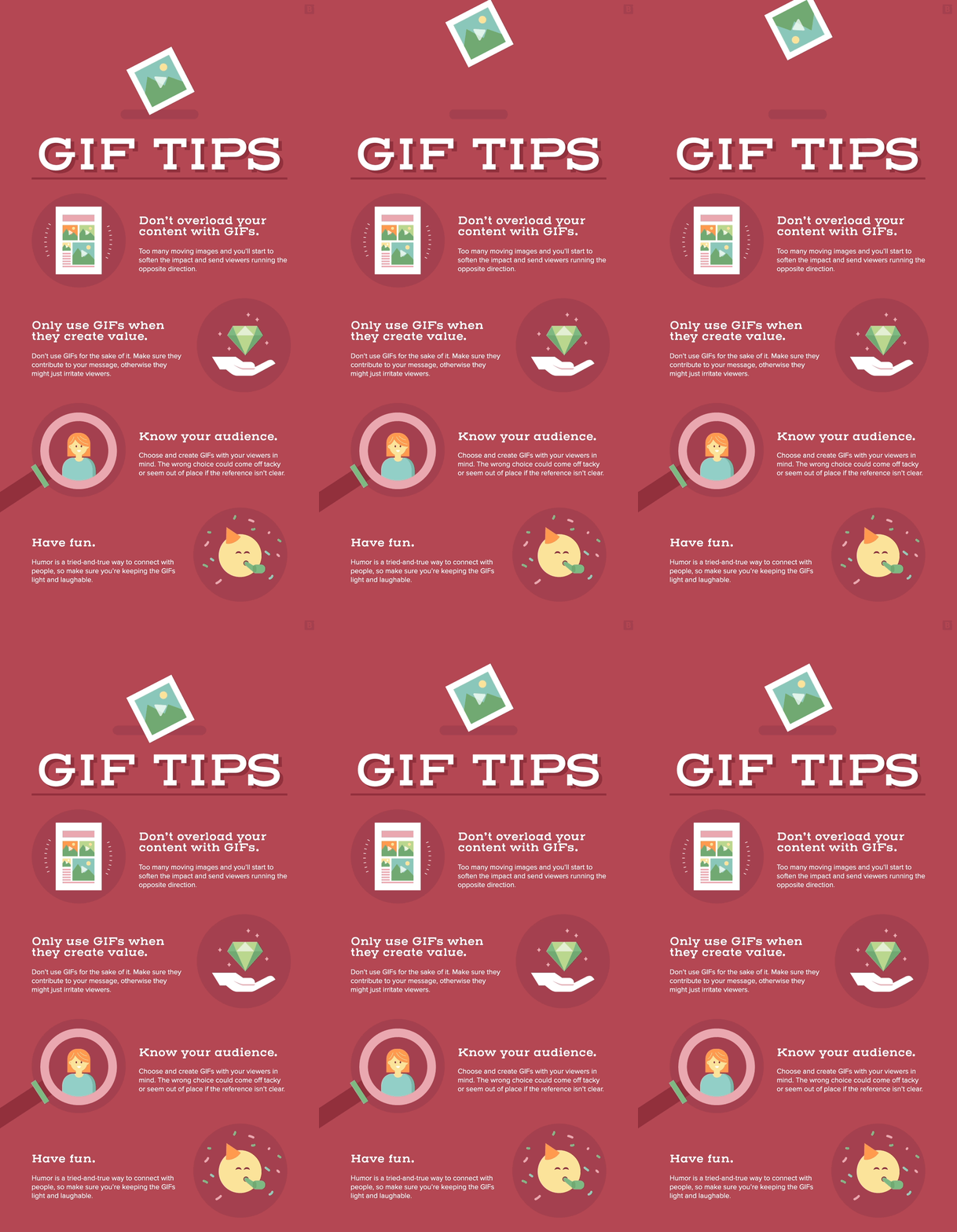
- Don’t overload your content with GIFs: Too many moving images and you’ll start to soften the impact of your message and send viewers running in the opposite direction. Remember, quality content always trumps quantity.
- Only use GIFs when they create value: Don’t use GIFs for the sake of it. Make sure they contribute to your message; otherwise, they might just annoy viewers.
- Know your audience: Choose and create GIFs with your viewers in mind. The wrong choice could come off tacky or seem out of place if the reference isn’t clear.
- Have fun: Humor is a tried-and-true way to connect with people, so make sure you’re keeping your GIF selection light and laughable. A well-chosen GIF can turn passive scrollers into active engagers. Pro tip: Avoid being controversial or insensitive; your humor still has to be responsibly-led.
What Are You Waiting For?
With the GIF 101 now officially in the bag, it’s time to take them for a spin. There’s no shortage of channels where these bite-sized animations shine.
Keep experimenting to see which marketing GIFs delight your audience the most, and let us know how it goes!
Editor’s Note: Updated January 2025